
Einleitung
ASUS präsentierte auf der CeBIT 2009 das Marine Cool Mainboard, welches besonders widrige Umweltbedingungen wie einen Stromausfall zumindest kurzzeitig überstehen sollte. Das Design fand dabei so starken Zuspruch, dass ASUS nun ein P55-Mainboard für Intels Sockel-1156-CPUs (Lynnfield Core i5 und i7) in einem angelehnten Design herausbringt.
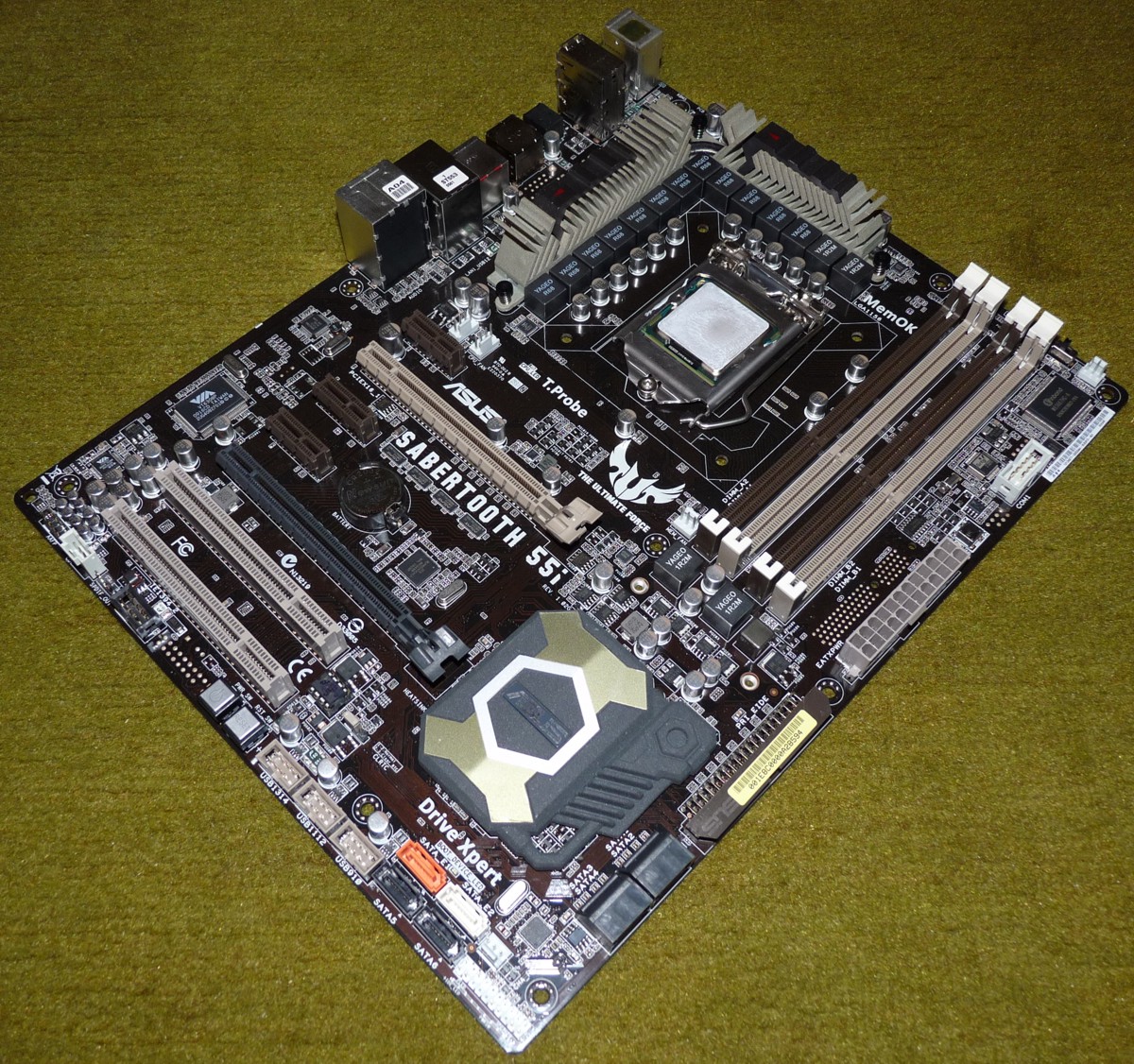
ASUS Sabertooth 55i
Das ASUS Sabertooth 55i steht dabei nicht direkt in Konkurrenz zur „Republic of Gamers“ Serie, da es von der Featureliste nicht direkt mithalten kann. Was dieses Mainboard dennoch einzigartig macht, zeigen wir euch in diesem Review.
Als Vergleich dienen die Mainboards Intel DP55KG, ASUS Maximus III Formula und P7P55D Deluxe, sowie ASUS Maximus III Gene, Gigabyte P66-UD6 und MSI P55-GD65.
Testsystem
- CPU: Core i5 750 (Turbo Off)
- RAM: 2x 2 GByte Mushkin DDR3 @1333-8-8-8-24
- Netzteil: Silverstone Decathlon 700W
- Grafikkarte: XFX GeForce GTX 280 (Treiberversion 180.48)
- HDD: WD1600 – 160 GByte
- Betriebssystem: Windows Vista 64bit

Neueste Kommentare
5. Juni 2026
31. Mai 2026
28. Mai 2026
16. Mai 2026
12. Mai 2026
29. April 2026