(Auszug aus der Pressemitteilung)
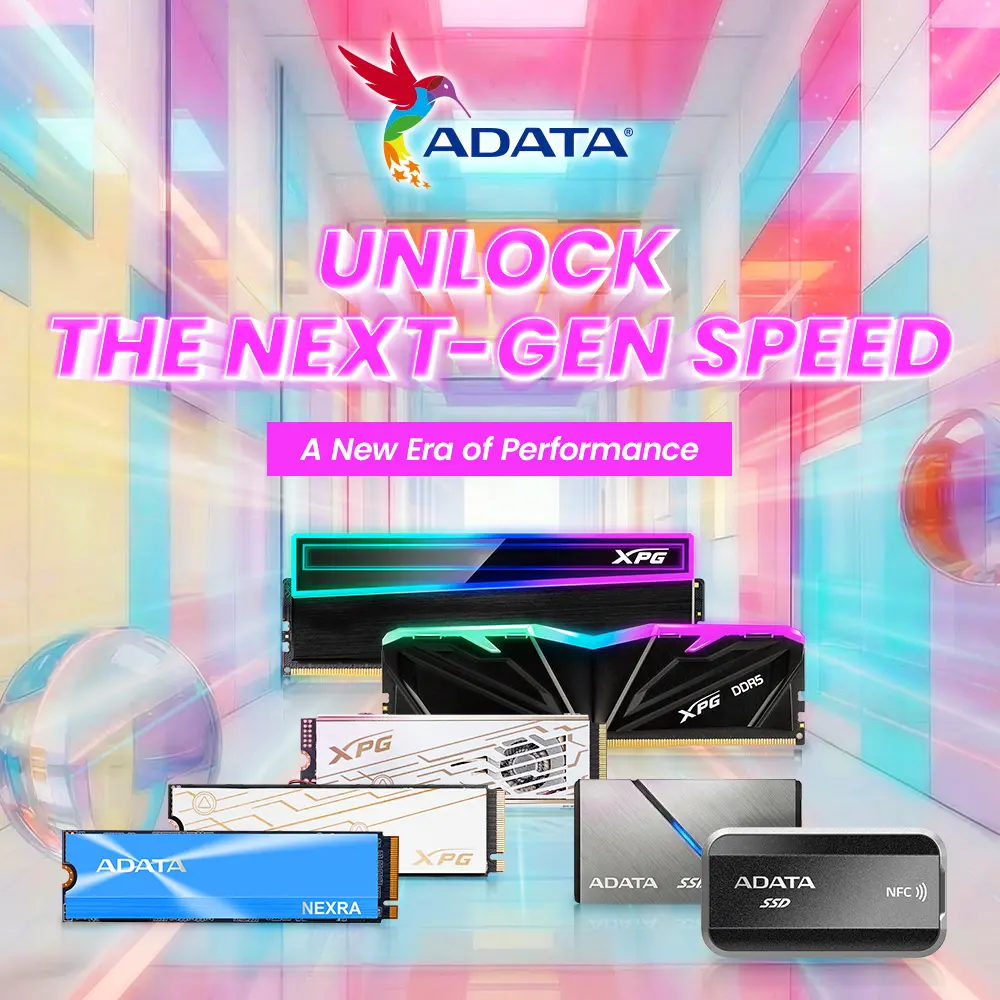
ADATA Technology, a global leader in memory modules and flash storage, is celebrating its 25th anniversary with the official launch of a new product strategy spanning key series across its ADATA and XPG brands. The lineup includes XPG memory series NOVAKEY and ARMAX, XPG SSD series MARS, ADATA SSD series NEXRA, and external SSD series URBAN.
This launch reflects ADATA’s continued evolution in product technology, performance, and application positioning, while also marking a broader upgrade in product strategy and architecture. It underscores the brand’s forward-looking vision for AI-driven applications and next-generation high-speed standards. Guided by its long-standing brand spirit, “Innovating the Future,” and aligned with its 25th anniversary theme, “Innovate to Inspire,” ADATA is reinforcing market communication through a clearer and more cohesive product language—continuing to drive future growth through innovation.
Evolving from Strategy to Structure and Redefining the Future Product Portfolio
As AI adoption accelerates and computing power continues to advance, memory and storage technologies have become essential to content creation, productivity, gaming, and intelligent applications. With years of expertise in the DRAM and flash storage markets, ADATA has built a broad product portfolio spanning consumer storage, system platforms, industrial control and vertical integration, as well as enterprise data center and server storage. Across these segments, ADATA delivers comprehensive hardware and software-integrated solutions.
As products continue to evolve and user needs become increasingly diverse, ADATA is also refining its product architecture and brand language to build a more unified and scalable ecosystem across ADATA and XPG. This approach enhances future product planning and market communication efficiency, allowing product value to be understood not only through technical specifications, but also through clearer market positioning and easier product selection.
Five Core Series Debut to Address Diverse Usage Scenarios with Greater Precision
The five newly introduced series span three major product categories: memory modules, SSDs, and external SSDs. Built around distinct usage scenarios, they integrate performance tiering with function-driven design to form a more consistent and structured product framework. Through clearer series segmentation, users can more quickly identify each product’s positioning and ideal use case, improving both purchase efficiency and the overall user experience.
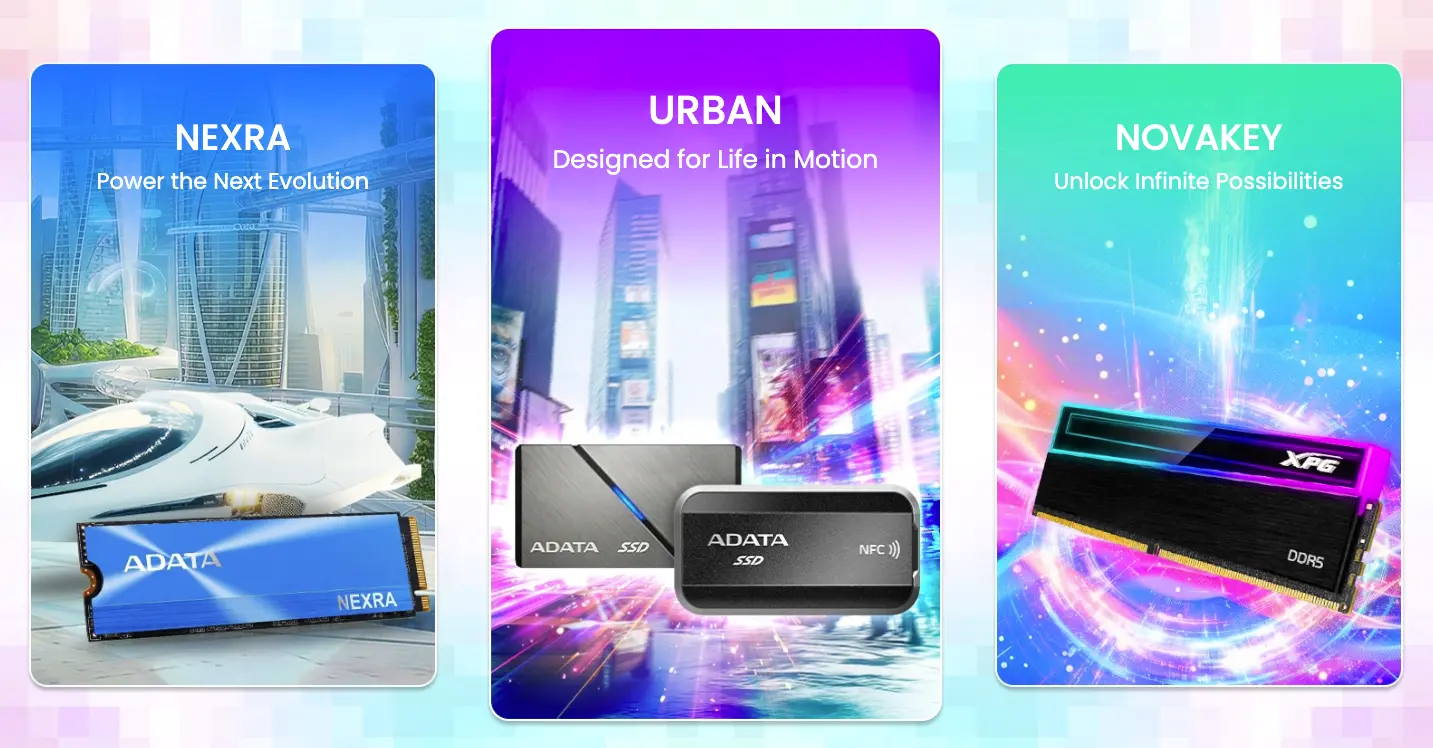
For gaming and high-performance applications, NOVAKEY, XPG’s flagship DDR5 memory series, is designed for AI developers, professional gamers, and creators seeking top-tier performance and cutting-edge technology. ARMAX is built for sustained high-load operation, making it ideal for intensive gaming, multitasking, and 3D rendering.
In high-speed storage, the MARS Gen5 SSD is centered on ultra-fast loading and high-speed transfer, meeting the dual demands of performance and thermal control for advanced gamers and content creators. For AI and content creation workloads, the NEXRA Gen5 SSD is tailored for high-resolution video production, AI inference, and large-scale data processing, delivering both high performance and high capacity. Meanwhile, the URBAN external SSD is designed around the rhythm of everyday life, supporting mobile work, cross-device file access, and on-the-go creativity with a focus on portability, high-speed transfer, and data security.
In addition, ADATA is launching a new concept website that presents the design philosophy and application scenarios behind each series, helping users quickly understand product differences and identify the most suitable solution. Through user-centric product planning and a more systematic portfolio structure, ADATA is strengthening its product strategy and shaping a more scalable roadmap for the future—one that is better aligned with evolving market needs.

Neueste Kommentare
6. Oktober 2026
3. Oktober 2026
2. Oktober 2026
1. Oktober 2026
12. September 2026
4. September 2026