Hartware.net
Hartware.netSonntag, 14.3.2010
Hartware.net
Fantastic Zero
RSS-Feed

Creative World of Warcraft Wireless Headset

Creative World of Warcraft Wireless Headset

Jetway XBLUE-H55 Mainboard für Core i3/i5

Jetway XBLUE-H55 Mainboard für Core i3/i5

Gulftown: Intel Core i7-980X mit 6 Kernen

Gulftown: Intel Core i7-980X mit 6 Kernen

Bioxar GH1 Gaming-Headset

Bioxar GH1 Gaming-Headset
RSS-Feed
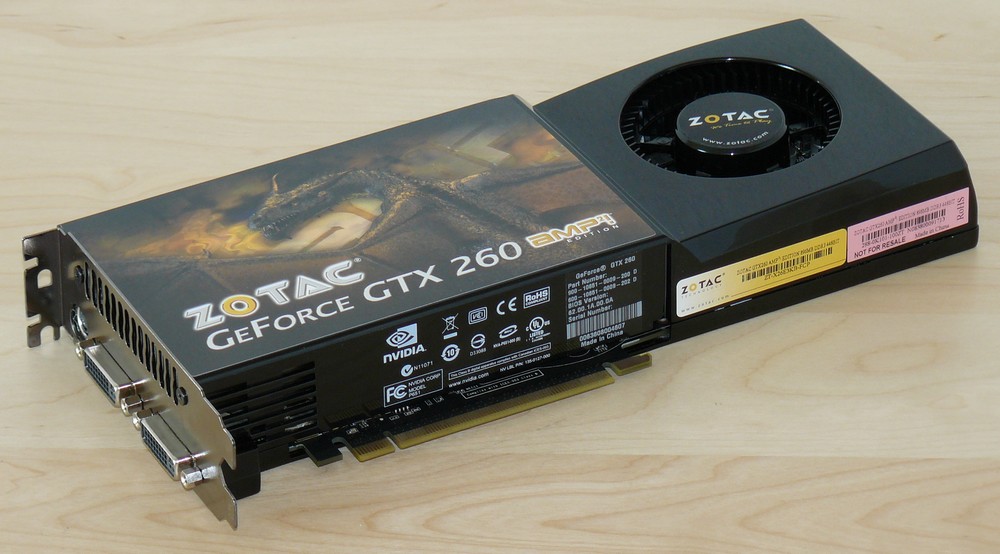
GeForce GTX 260 Plus: Zotac Amp²
von Frank Schräer
Company of Heroes: Opposing Fronts

Im Echtzeit-Strategietitel Company of Heroes: Opposing Fronts übernimmt der Spieler zahlreiche Missionen im Zeitraum gegen Ende des zweiten Weltkriegs und muss hier mit Glück und Geschick seine Soldaten und Geräte lenken. Das Game nutzt bereits DirectX 10 und bietet erstaunliche Detaillierungsgrade, die mit Strategiespielen vergangener Jahre kaum noch etwas zu tun haben. Zoomt man von der Übersichtsposition ganz runter auf die Spielfiguren, sehen diese aus wie aus einem First-Person-Shooter und man kann ihnen z.B. beim Kopfkratzen zuschauen.


Company of Heroes: Opposing Fronts Benchmark-Screenshots
(Anklicken zum Vergrößern!)

Verschiedene Detail-Stufen aus gleicher Beobachtungsposition unterschiedlicher Höhe

Wir testen mit der Vollversion des Spiels in den höchstmöglichen Grafik-Einstellungen, einmal mit und einmal ohne Full-Scene Anti-Aliasing. Dabei wird die integrierte Benchmark-Funktion verwendet.

Company of Heroes – Opposing Fronts

Intel Core 2 Duo 3.33 GHz, 2 GByte, Intel X38, Windows Vista
1280x1024
GeForce GTX 280
Zotac GTX 260+ Amp²
GeForce 9800 GX2
GeForce GTX 260+
GeForce GTX 260
GeForce 9800 GTX+
GeForce 9800 GTX
GeForce 8800 GTS 512
GeForce 8800 GTX
GeForce 8800 GT
GeForce 9600 GT
Radeon HD 4870
Radeon HD 4850
Radeon HD 3870
Radeon HD 2900 XT
Radeon HD 3850
Radeon HD 4670
GeForce 9500 GT
Radeon HD 4650
GeForce 8600 GTS
GeForce 8600 GT
113.1
113.1
106.7
106.4
100.9
83.2
77.0
74.0
69.7
65.1
47.5
46.2
41.0
35.8
34.0
32.1
26.5
22.3
20.7
19.3
15.1
1680x1050
GeForce GTX 280
Zotac GTX 260+ Amp²
GeForce 9800 GX2
GeForce GTX 260+
GeForce GTX 260
GeForce 9800 GTX+
GeForce 9800 GTX
GeForce 8800 GTS 512
GeForce 8800 GTX
GeForce 8800 GT
Radeon HD 4870
Radeon HD 4850
GeForce 9600 GT
Radeon HD 3870
Radeon HD 2900 XT
Radeon HD 3850
Radeon HD 4670
Radeon HD 4650
GeForce 9500 GT
GeForce 8600 GTS
GeForce 8600 GT
93.7
92.6
89.8
85.6
79.5
66.1
59.1
56.4
52.2
47.8
42.9
35.6
34.5
30.4
29.6
24.2
21.6
16.4
15.9
12.9
10.7
1920x1200
GeForce GTX 280
Zotac GTX 260+ Amp²
GeForce 9800 GX2
GeForce GTX 260+
GeForce GTX 260
GeForce 9800 GTX+
GeForce 9800 GTX
GeForce 8800 GTS 512
GeForce 8800 GTX
GeForce 8800 GT
Radeon HD 4870
Radeon HD 4850
GeForce 9600 GT
Radeon HD 2900 XT
Radeon HD 3870
Radeon HD 3850
Radeon HD 4670
Radeon HD 4650
GeForce 9500 GT
GeForce 8600 GTS
GeForce 8600 GT
82.9
80.8
78.5
73.5
67.8
55.3
49.5
47.2
44.1
40.6
40.1
33.0
28.3
25.8
24.0
21.0
18.9
13.8
12.8
10.4
8.5

CoH: Opp. Fronts – FSAA 4x

Intel Core 2 Duo 3.33 GHz, 2 GByte, Intel X38, Windows Vista
1280x1024
GeForce GTX 280
Zotac GTX 260+ Amp²
GeForce GTX 260+
GeForce 9800 GX2
GeForce GTX 260
GeForce 9800 GTX+
GeForce 9800 GTX
GeForce 8800 GTS 512
GeForce 8800 GTX
GeForce 8800 GT
Radeon HD 4870
Radeon HD 4850
GeForce 9600 GT
Radeon HD 3870
Radeon HD 2900 XT
Radeon HD 3850
Radeon HD 4670
Radeon HD 4650
104.9
102.2
95.9
92.9
91.1
68.4
64.2
60.1
59.5
54.3
54.1
47.0
42.8
38.6
37.2
32.3
31.8
22.0
1680x1050
GeForce GTX 280
Zotac GTX 260+ Amp²
GeForce GTX 260+
GeForce 9800 GX2
GeForce GTX 260
Radeon HD 4870
GeForce 9800 GTX+
GeForce 9800 GTX
GeForce 8800 GTX
GeForce 8800 GTS 512
Radeon HD 4850
GeForce 8800 GT
GeForce 9600 GT
Radeon HD 3870
Radeon HD 2900 XT
Radeon HD 3850
Radeon HD 4670
Radeon HD 4650
84.5
82.1
74.8
73.0
69.4
50.5
50.4
46.7
44.5
44.4
41.6
39.4
30.7
28.4
26.8
23.4
23.2
16.4
1920x1200
GeForce GTX 280
Zotac GTX 260+ Amp²
GeForce GTX 260+
GeForce GTX 260
GeForce 9800 GX2
Radeon HD 4870
GeForce 9800 GTX+
GeForce 9800 GTX
Radeon HD 4850
GeForce 8800 GTX
GeForce 8800 GTS 512
GeForce 8800 GT
GeForce 9600 GT
Radeon HD 3870
Radeon HD 2900 XT
Radeon HD 4670
Radeon HD 3850
Radeon HD 4650
70.8
68.1
61.3
58.0
49.6
45.1
40.1
37.5
36.8
35.4
34.9
31.9
24.5
21.8
20.5
18.9
18.7
13.5

In Company of Heroes konnten die Radeon HD 4800 Grafikkarten der High-End-Konkurrenz von Nvidia noch nie das Wasser reichen, das hat sich mit der GeForce GTX 260+ und auch mit neuen Treibern nicht geändert.
Die neue GTX 260 profitiert von der ausgiebigen Nutzung von Shadern in diesem Spiel und setzt sich 6 bis 8 Prozent vor die alte GTX 260.


vorherige Seite | nächste Seite


Copyright © 1998-2010 • Hartware.net
Home
Newsarchiv
Reviews
Reports
Presse
Links
Webweites
Suche
Forum
Impressum

Anzeige
 
[1] GeForce GTX 260 Plus: Zotac Amp²
[2] Grafikkarte und Ausstattung
[3] Taktraten und Overclocking
[4] Test-Setup
[5] 3DMark Vantage
[6] Call of Duty 4 - Modern Warfare
[7] Enemy Territory: Quake Wars
[8] Half-Life 2: Episode One
[9] Unreal Tournament 3
[10] Company of Heroes: Opposing Fronts
[11] Crysis
[12] World in Conflict
[13] Stromverbrauch
[14] Fazit

09.03.2010
Bioxar GH1 Gaming-Headset
07.03.2010
A.C.Ryan PlayOn! HD Media-Player
02.03.2010
AMD 890GX: ASUS M4A89GTD Pro/USB3
28.02.2010
Maxcube Vortex 3620 Midi-Tower
26.02.2010
Besser Leise Scythe PC
25.02.2010
ATI Radeon HD 5830
24.02.2010
Zotac H55-ITX Mainboard für Core i3/i5
22.02.2010
Lancool PC-K62 - Red Dragon Edition
21.02.2010
MSI P55-GD85 High-End Mainboard für Core..
19.02.2010
Low Profile: Radeon HD 5450 und 5570